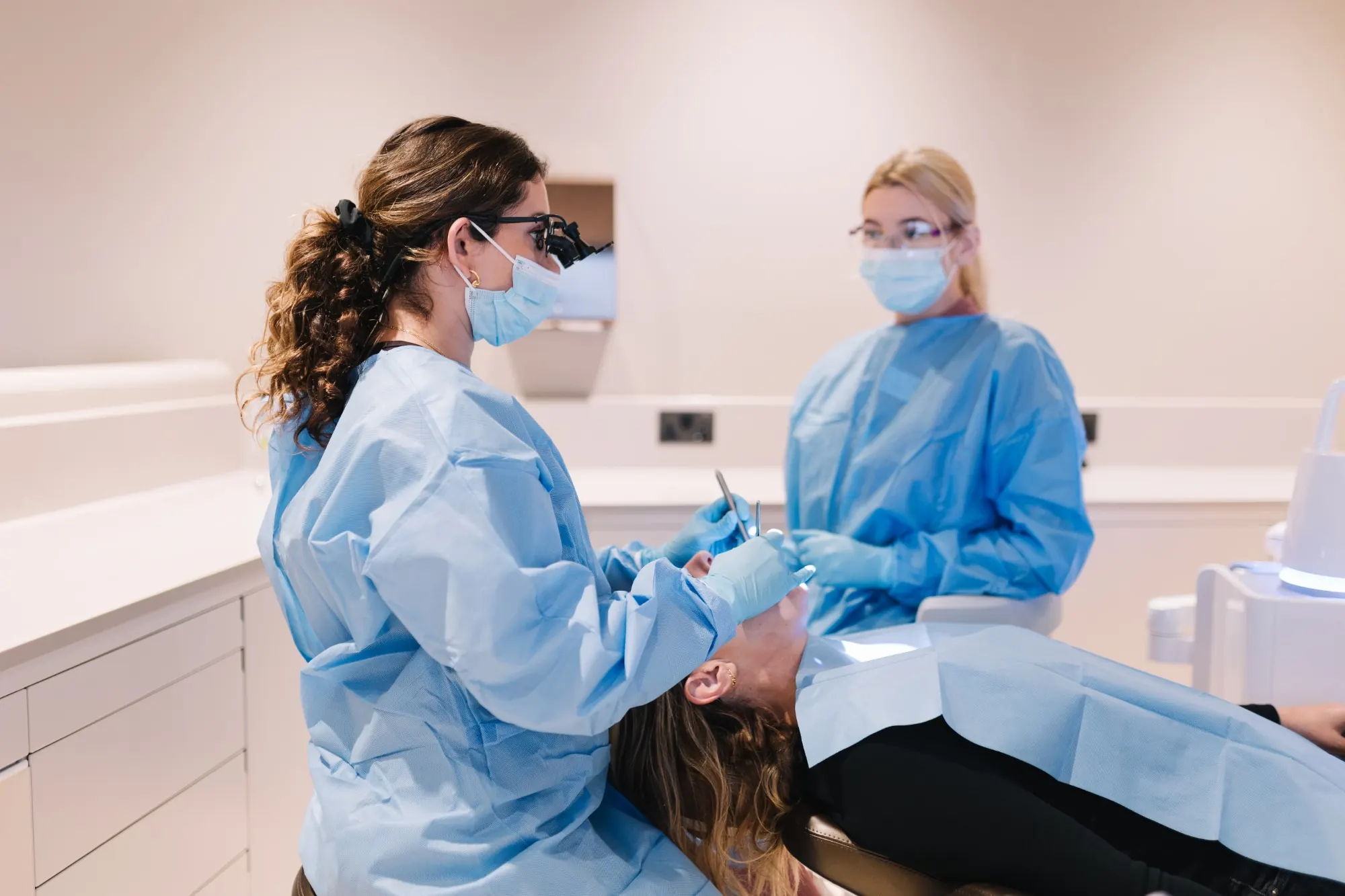
Understanding gum disease, from gingivitis to periodontitis
Gum disease often starts quietly and can affect your gums, bone and teeth if left untreated.
Book a consultationGum disease is one of the most common oral health conditions, yet many people are unaware they have it until symptoms become noticeable. It often begins with bleeding gums but, if left untreated, can progress to affect the gums, supporting bone and long-term stability of the teeth. Dr Payvand Menhadji provides comprehensive periodontal assessment and evidence-based treatment for patients with gingivitis, periodontitis and other gum conditions, helping to protect your oral health for the future.
What is gum disease?
Gum disease, also known as periodontal disease, is a chronic inflammatory condition caused by the body's response to bacterial plaque building up around the teeth and gums.
The condition develops in stages:
Gingivitis
Gingivitis is the earliest stage of gum disease. The gums may become red and swollen, and bleed during brushing or flossing.
At this stage, only the gum tissue is affected, and no permanent damage has occurred to the supporting bone. With good daily cleaning and professional care, gingivitis is reversible.
Periodontitis
If gingivitis is left untreated, it may progress to periodontitis.
Periodontitis affects the deeper supporting tissues, including the bone around the teeth. Over time, this can lead to gum recession, bone loss and loose teeth if not appropriately managed.
Signs and symptoms of gum disease
Gum disease often develops gradually and may not cause pain, particularly in its early stages.
Common signs include:
- Bleeding gums during brushing or flossing
- Red or swollen gums
- Persistent bad breath
- Gum recession
- Teeth appearing longer
- Tooth sensitivity
- Spaces developing between teeth
- Loose or shifting teeth
- Changes in your bite
If you notice any of these symptoms, a professional periodontal assessment is recommended.
What causes gum disease?
The primary cause of gum disease is bacterial plaque around the teeth and gum line.
Several factors can increase the risk of developing periodontal disease, including:
- Smoking
- Diabetes
- Family history of gum disease
- Hormonal changes
- Stress
- Certain medications
- Poor oral hygiene
- Irregular dental visits
Often, a combination of factors contributes to the development and progression of the condition.
What happens if gum disease is left untreated?
Without treatment, gum disease may continue to progress and affect the supporting tissues around the teeth.
Possible consequences include:
- Ongoing gum inflammation
- Progressive gum recession
- Loss of supporting bone
- Increased tooth mobility
- Changes in bite function
- Tooth loss in advanced cases
Early diagnosis and treatment can help preserve healthy gums, supporting bone and natural teeth.
Gum disease treatment
Treatment depends on the severity of the condition and your individual oral health needs.
Management may include:
- Professional removal of plaque and tartar (calculus)
- Personalised oral hygiene advice
- Non-surgical periodontal therapy
- Ongoing periodontal maintenance
- Periodontal surgery, including regenerative surgery, where deep pockets remain
The goal is to control inflammation, prevent further damage and maintain healthy gums and supporting tissues.
Support from a Specialist Periodontist
Managing gum disease requires careful assessment and long-term maintenance.
As a Specialist Periodontist, Dr Menhadji provides comprehensive diagnosis and personalised treatment for patients with gingivitis, periodontitis and more complex periodontal conditions, including gum recession and bone loss.
Treatment focuses on achieving healthy, stable gums and helping patients maintain their natural teeth for as long as possible.
Protect your gums before small problems become bigger ones.
Early assessment can identify gum disease and provide the most appropriate treatment to support your long-term oral health.
Frequently asked questions

Get in Touch.
Whether you are a patient, a referring dentist or a professional contact, tell us a little about what you need and we will make sure your message reaches the right person.
For rapidly spreading facial swelling, or difficulty breathing or swallowing, call 999 or go to A&E. For urgent advice out of hours, call NHS 111.