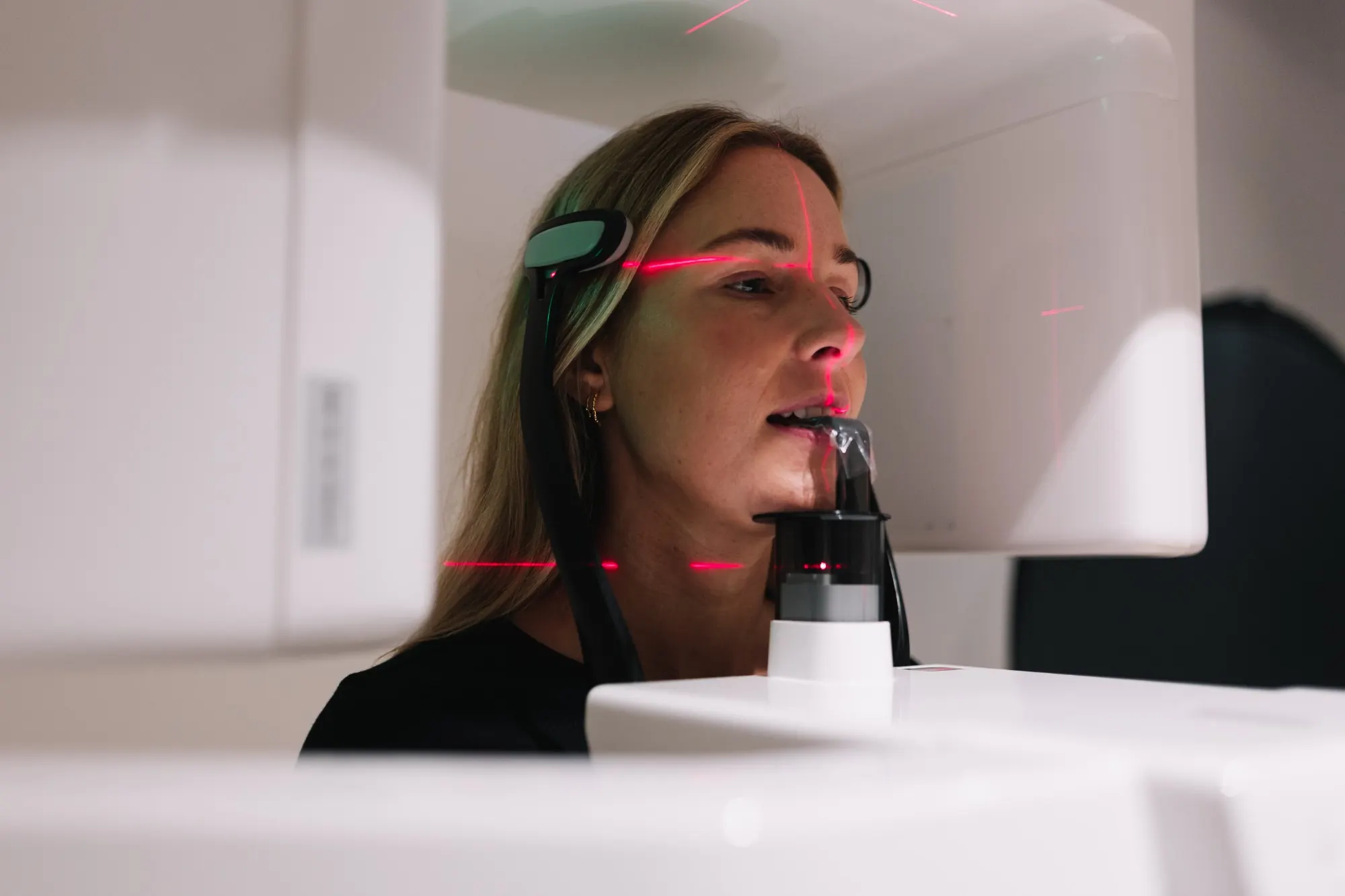
Loose teeth: a sign that needs prompt specialist assessment
A loose tooth doesn't always mean it's beyond saving. A specialist assessment can identify the cause and the options for keeping the tooth.
Book a consultationWhat causes loose teeth?
Adult teeth rely on healthy bone, gums, and periodontal ligaments for support.
When these supporting structures become damaged, teeth may begin to move or feel unstable.
Common causes of loose teeth include:
- Periodontitis
- Bone loss around the teeth
- Trauma or injury
- Teeth grinding and clenching
- Bite-related problems
- Advanced dental infections
- Smoking, a major risk factor for gum disease
- Poorly controlled diabetes
- Long-standing gum inflammation
A thorough periodontal assessment is often necessary to determine the underlying cause and extent of the problem.
If a tooth has become loose after a knock or injury, contact your dentist urgently, ideally the same day.
Teeth moving due to gum disease
One of the most common causes of loose teeth
One of the leading causes of loose teeth in adults is periodontal disease.
When gum disease progresses from gingivitis to periodontitis, inflammation can begin to affect the bone and connective tissues that support the teeth. Over time, this may result in gradual loss of support and increasing tooth mobility.
Patients may notice:
- Teeth moving or drifting
- New gaps developing between teeth
- Changes in tooth position
- Difficulty biting or chewing
- Teeth feeling unstable
- Gum recession
- Bleeding gums
- Persistent bad breath
Because these changes often occur gradually, many patients are unaware of the extent of the problem until significant damage has already developed.
Signs that loose teeth may require specialist assessment
Not all loose teeth indicate severe periodontal disease, but professional evaluation is important whenever mobility is detected.
Symptoms that may accompany loose teeth include:
- Swollen or bleeding gums
- Receding gums
- Tooth sensitivity
- Discomfort when chewing
- Shifting teeth
- Changes in bite alignment
- Spaces appearing between teeth
The earlier these symptoms are assessed, the greater the opportunity to preserve existing teeth and prevent further deterioration.
What happens if loose teeth are left untreated?
Without appropriate management, the underlying cause of tooth mobility may continue to progress.
Potential consequences may include:
- Increased tooth movement
- Progressive bone loss
- Further gum recession
- Difficulty chewing
- Changes in bite function
- Greater risk of tooth loss
- Increased complexity of future treatment
Because bone loss caused by advanced periodontal disease is often difficult to reverse, early intervention plays an important role in preserving oral health.
Loose teeth treatment in London
The most appropriate treatment depends on the cause of the mobility and the health of the surrounding tissues.
Management may involve:
- Professional periodontal cleaning
- Removal of plaque and calculus deposits
- Personalised oral hygiene guidance
- Non-surgical periodontal therapy
- Advanced periodontitis treatment
- Bite adjustment where appropriate
- Splinting of mobile teeth in selected cases
- Ongoing maintenance and monitoring
The primary goal is to control disease progression, preserve supporting structures, and improve long-term stability wherever possible.
As a Specialist Periodontist, Dr Menhadji provides comprehensive assessment and treatment for patients experiencing loose teeth, bone loss, gum recession, and advanced periodontal disease.
Have a loose tooth assessed early.
Prompt assessment can help determine the cause of loose teeth and discuss appropriate treatment options.
Frequently asked questions

Get in Touch.
Whether you are a patient, a referring dentist or a professional contact, tell us a little about what you need and we will make sure your message reaches the right person.
For rapidly spreading facial swelling, or difficulty breathing or swallowing, call 999 or go to A&E. For urgent advice out of hours, call NHS 111.