Dental implants.
Replacing missing teeth, planned and placed by a specialist for long-term stability.
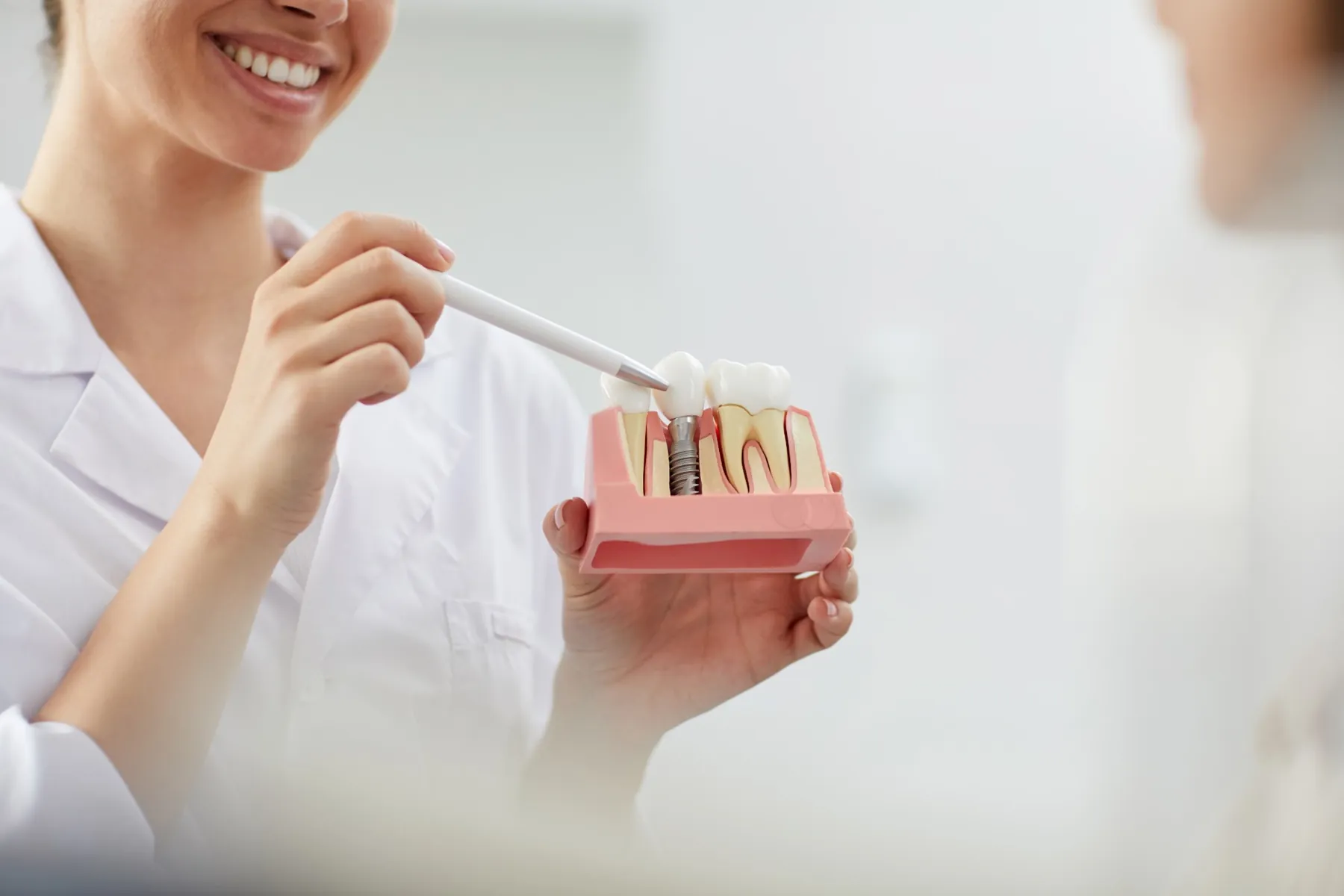
The closest thing to a natural tooth.
A dental implant is a small titanium post placed into the jawbone to replace the root of a missing tooth. Once it has integrated, it supports a crown, bridge or denture that looks and functions like a natural tooth, and helps preserve the bone that would otherwise shrink after tooth loss.
Implants are placed only once the gums are healthy, because treating gum disease first greatly reduces the risk of problems around the implant later.
How They Work
Placing an implant is a staged, biological process, not a single appointment.
A titanium post is positioned where the tooth root used to be. Over the following few months, bone grows around and bonds to it, a process called osseointegration, creating a stable foundation.
Every case is planned digitally using 3D imaging, with the final tooth designed first and the implant positioned to support it. Where a tooth still needs removing, or where bone is thin, preparatory steps such as extraction or grafting are planned first.
Once healing is complete, an abutment and a custom-made crown are fitted, restoring both function and appearance.
Why patients choose implants.
A replacement that looks, feels and functions like a natural tooth, and protects the bone beneath it.

Natural look and feel

Confident eating

Clear speech

Protects the jawbone

Kind to other teeth

Built to last
Matched to how many teeth are missing.

A careful assessment first.
Most healthy adults missing one or more teeth are suitable. The best results come with healthy gums, enough bone to support the implant, and good oral hygiene. Smoking, uncontrolled diabetes or significant bone loss do not necessarily rule implants out, but may need assessment or preparatory treatment first.
As a Specialist Periodontist, Dr Payvand Menhadji places particular emphasis on the health of the gums and bone before any implant is considered, which is what protects the result over the long term.
A planned, staged pathway.
From your first consultation to the final crown, here is how treatment unfolds.

01

02

03

04

05
Frequently asked.
Find out whether implants are right for you.
Get in Touch.
Whether you are a patient, a referring dentist or a professional contact, tell us a little about what you need and we will make sure your message reaches the right person.
For rapidly spreading facial swelling, or difficulty breathing or swallowing, call 999 or go to A&E. For urgent advice out of hours, call NHS 111.